
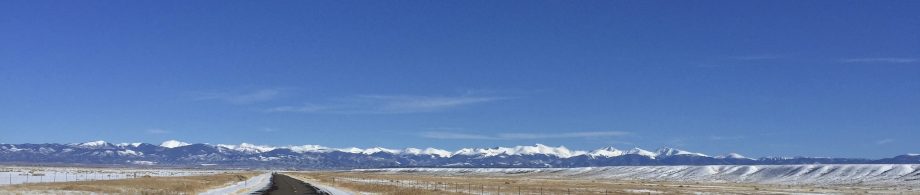


Last summer was the first time in the lives of the old-timers that temperatures stayed above 90 for more than a day or two. In my five full summers here, summer temps rarely got over 85. Being at 7800 ft. above sea level contributes to the coolness. But, last season everyone’s gardens or alfalfa fields were challenged. Water is regulated by the state for agricultural use, which is a good thing, although I live among mostly conscientious people. Several live off-grid, and water conservation is necessary and has been practiced by the Indigenous People (Ute and Pueblo People) forever.
Even with the increased heat and drought, my garden did pretty well, which is important since it feeds a number of people including myself. I’m no master gardener and don’t do much research. My primary method is to listen: to the plants, the soil, and all the beings, obvious ones like birds, worms, variety of insects, fungi and microbes and the less obvious ones like elementals and devas (the spirits of the soil, water, plants, and back yard as a whole). Harmony is the goal, not produced by me (how preposterous!) but not interfered with. That means that a fair measure of wildness is let be and fostered. Two “wild things” are:
- a) A section that is watered but mostly left to be wild. Most native species of bees in most habitats around the world are not hive-dwellers. They use old stalks or canes for preparing a proper nest with pre-gathered pollen (food) in which they lay usually one egg which then pupates and eats it way out from the cane/stalk next season. That is if the woodpeckers or nuthatches don’t fine the larvae first. Beetles use the stalks in the same way. A few holly hocks babies were put in the first season (five years ago) from my neighbor’s yard, which now have self spread to take up at least 8ft of the 30ft X 5 or 6ft area. Native sunflowers accompany the holly hocks, as so other flowerings native plants whose seeds were waiting in the soil. Cosmos seeds have blown into there also.
- Some indigenous plants that the locals consider a bane are friends in my garden and “managed”. One is bind weed. It is a nitrogen fixer and can grow in the most poor soils or mostly sand. It knows how to thrive here; and that’s important because plants communicate (as does every thing within Earth’s wholeness). So, the bind weed’s pioneering presence encourages other indigenous flowering plants to come up from seeds long stored in the sandy “soil”. Bind weed also composts quickly in the veggie beds when trimmed or uprooted, giving all its nutrients into the ground for other plants. A balance was struck. The bind weed is let grow in general and managed around the vegetables. This plant is also a go-to for an indigenous small white butterfly. It feeds off the nectar in the early and then season-long pretty white or white-pink flowers.


Soaker hoses will offer me the physical advantage of already being in place. Turn it on and come back in hour or appropriate length of time. Then, simply, shut one paddle of the hose splitter and open another. Leave and come back later. For someone who requires a walker plus a hip flexion device to walk outside, I am hopeful that the plants will be well served and me, too.
Most vegetable plants prefer ground watering, not overhead/sprinkler watering, though my tomato plants have never, in 40 years of gardening, gotten blight from sprinkler watering. Here due to the dryness of the air (semi-desert ecological zone) and the ever-present wind, achieving ground saturation with sprinklers requires a) too much water to be used with b) too much potential loss to evaporation. Soaker hoses delete both. They use much less water than sprinklers or hand watering plus the water never leaves the ground, thus toward the roots and microbes, worms, etc. feeding the roots. I’ll report back on the soaker hose effectiveness later in the season. Plants, like tomatoes, might need additonal hand watering or filling of the small ditches with water in each of the beds. That will be obvious when necessary.

Post, Happy Spring! #2, will be about soil fertility and planning the beds.

