With the Morning

Five hundred or so years ago, Grandfather would take me out. Each morning we would meet the day. Sometimes the cold wind would almost whisk me away but he would hold my hand and his strength was all I needed. We would walk to a spot, it would change with the season, sometimes change with his song. Once arrived, He would sing his prayer. It was always brand new; it sprang from his heart. This morning with the sun, I heard my heart with his. We sang a song to the morning.

I remember learning to love the rain, the cold, the snow, the sun of the morning. Each was met with delight. “So grateful that you are here today. What mysteries are you reporting?” I still feel the touch of his hand, the sound of his voice, his many teachings, and how he opened me to the songs of Life.

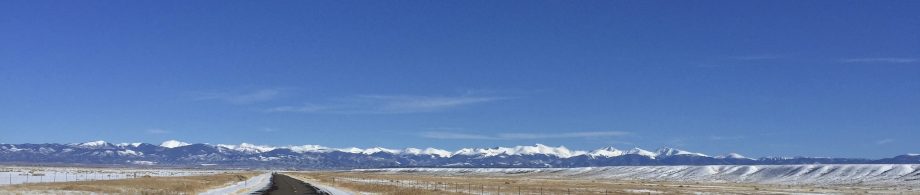
Now, so many lifetimes hence, I still hear the songs, and begin my morning in a similar way albeit usually from inside the house.  And when I don’t do this, I am dead, a lumbering bulk of ignorance. But this morning as the North wind howls and sun sparkles through naked trees, I’ll throw a blanket around me and sing with the morning.

About Donna Mitchell-Moniak

Visit www.blazinglight.net for additional meditations and blog posts.
This entry was posted in Mother Earth and tagged , , , , . Bookmark the permalink.

4 Responses to With the Morning

  1. Indrajit Rathore – Jaipur, Rajasthan, India – I am a retired Indian diplomat living in the city of Jaipur in Rajasthan, India. I am interested in spirituality, mysticism, theology, art, museum development and archeological sites. I have published a book of poems - Primal Colour and Introspections on the Gita which was launched last year at the Jaipur Literature festival. I am also deeply interested in observing nature and animal behaviour. Related to my interest in spirituality is my obsession in reading about New Age thought which seeks to align spirituality and mysticism with science to show that they are indeed two sides of the same coin. My writings and poems support this view that as science progresses it appears to get more and more mystical in its findings, particularly at the sub atomic levels - The findings of Quantum Physics for instance are not very different from the findings of mystical seers and thinkers of yore about the nature of reality- a revolution in thought bringing to gether science and spirit appears to have gathered momentum in the 20th and now the 21st centuries. Most of my life I have been intrigued by the concept of the Soul. Every faith speaks of it, many scholars have written about it, both in the past and in what is called New Age literature. In common parlance too we refer to Soul so often. Yet it is the most ambiguous of concepts to truly comprehend. My curiosity led me to research what the different scriptures say about it – all refer to it. Later I sought to understand its metaphysical significance and reality and even experience its presence mystically through meditation, poetry, music and literature. My primary blog entitled SEARCH FOR THE SOUL therefore tries to share whatever I have gleaned from diverse sources on the subject and to invite feed back which could help to enlighten me further on the subject. My second blog however presents only my poems on mystical insights and experiences, nature and animal behavior, human relationships, heritage and culture, peoples lands and travel, faith, the cosmos, God and revered Hindu deities and introspection. I regard my poems as thought forms having an organic reality of their own. they arise from a lifetime of mystical introspection, the experience of living or my interface with nature and find expression through the rhythms of the mind. At times, it is the rhythm that initiates the grasping of a thought. At others, it is the thought, grown pregnant, that arouses a rhythm and sometimes they come together. I hope they will strike a sympathetic chord in the reader and recreate in his mind the same complex experience which spurred their creation.
    Indrajit Rathore says:

    beautiful – and it goes on

    • Donna Mitchell-Moniak – Visit www.blazinglight.net for additional meditations and blog posts.
      Donna Mitchell-Moniak says:

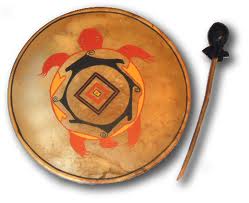
      yes, the beat of his drum and teaching still sings in my heart hundreds of year later. We are blessed with many precious teachers through our lifetimes. Their kindness and wisdom lives on within us.

      The best offering of gratitude back to them is to live and further their seeds. Peace to you! Happy New Year 🌸

  2. Hodalee Scott Sewell – Navarre Beach Florida – Creek/Cheraw, stompdancer, powwow straight dancer, reader, researcher, writer, artist. Select Books by Hodalee C. Scott Sewell Published by Backintyme Publishing The Indians of North Florida: From Carolina to Florida, the Story of the Survival of a Distinct American Indian Community {Paperback} – June 17, 2011 In the early 1800s, dozens of Siouan-speaking Cheraw families, including Catawbas and Lumbee’s, fled war and oppression in the Carolinas and migrated to Florida, just as native Apalachicola Creeks were migrating away. Being neither Black nor White, the Cheraw descendants were persecuted by the harsh “racial” dichotomy of the Jim Crow era and almost forgot their proud heritage. Today they have rediscovered their past. This is their story. https://www.amazon.com/Indians-North-Florida-Carolina-Community/dp/0939479370/ref=pd_bxgy_14_img_2?_encoding=UTF8&psc=1&refRID=5AB6GFA91JYDJQAVGK05 Belles of the Creek Nation (American Bred) {Paperback} – December 19, 2015 Belles of The Creek Nation is an innovative and modern perspective investigating the problematic linkages between preservation of cultural heritage, maintaining cultural diversity, defining and establishing cultural citizenship, and ancient tribal rite of passage. It is the first publication to address the notions of cultural diversity among Mixed Blood heritage, tribal culture and sacred rights of the people, all in one book. The relationships and heritage presented provides the basis of humanity's rich cultural diversity among descendants of remnant Indian clans. While there is considerable literature dealing separately with cultural diversity, cultural heritage and tribal rights, this book distinctively presents contemporary relevance in focusing on the intersection between these concepts. Sewell presents the cultural diversity, heritage, citizenship and tribal rights; and establishes a fresh approach that will interest students, descendants and practitioners alike exposing a new and fresh perspective for future work and genealogical study in the Mixed blood Indian heritage of America. "Your blood will mix with ours; and will spread with ours, over this great island…The ultimate point of rest and happiness for (Indians and Americans ) is to let our settlements and theirs meet and blend together, to intermix, and become one people." -Excerpted from a letter written by President Thomas Jefferson to United States Indian Agent to the Creek Nation, Benjamin Hawkins, to relay to Creek leaders, February 18 1803 "Scott Sewell has written the saga of our diverse heritage bringing to light the relationships and powerful influence of the Countrymen within the Native American life , sharing details of the sacred rituals passed down for generations. We are not a lost people but have been hidden in plain sight in our closed communities and clan marriages. There has been a great awakening and now Scott has brought our history out of the darkness and is shining the light on the heritage, lives and struggles of our people in Belles of The Creek Nation." Marilyn Baggett Kobliaka, Redbone Descendant, of the Doyle & Hill Families, Author & Family Historian "Belles of the Creek Nation is a richly detailed narrative of the complex web of interrelated Native American Creek families. Both exciting to read and edifying in content, Sewell has brought to light a little explored area of history with a meticulous eye for detail and flowing writing style. A great addition to the library!" Lars Adams, Author and Independent Researcher "Christopher does a great job of blending introspective genealogy with objective history. I especially liked the last chapter. The tension between tribal leaders wanting to restrict membership (or even expel members) when slicing the pie of financial benefits from the Bureau of Indian Affairs, on the one hand, versus the avalanche of non-clan members seeking (or even demanding) Indian self-identity, on the other, is fascinating. I get the impression that if you ask three random tribal leaders what defines a "true Indian" you will get four conflicting opinions." Frank W. Sweet, History of the U.S. Colorline. https://www.amazon.com/Belles-Creek-Nation-American-Bred/dp/0939479508/ref=tmm_pap_swatch_0?_encoding=UTF8&qid=1499885260&sr=1-1 The Cherokee Paradox: Unexpected Ancestry at the Crossroads of Identity and Genetics {Paperback} – March 21, 2016 For much of human history the community tradition as related from elders to a new generation was the gospel as to one’s personal as well as group identity, with little other sources of information available to contradict it. Today, new developments in the science of human genetics have led to unparalleled insight into the identities of our ancestors long ago, but in some cases this information has made it more difficult to answer the question of who we are today. Genetics has brought to light in stunning detail the origins, continual migrations, and intermixture of humanity as how our ancestors spread across the planet. The complexity of this story has taken many by surprise. This is especially so in the Native American community, where hundreds of thousands of members of federally recognized Indian tribes are finding to their surprise little if any Native American ancestry identified on their direct-to-consumer DNA test reports; such as those offered by 23andme and Ancestry.com, a phenomenon that has come to be known as the ‘Cherokee paradox’. Huge numbers of Indian tribal members have been taken aback by their paucity and even lack of Native genetic ancestry, and its impact on personal and cultural communities. The need to understand how and why such disconnect could occur between the social, legal, and biological identities of a single person or community is great. Like some in Indian Country, other Americans are finding that despite what their family oral history teaches, they had little idea of the complexity and diversity of their ancestral origins. The impact of genetics on identity is immense and unfolding, and it promises to be revolutionary in a multitude of ways; in “The Cherokee Paradox” we investigate its complexity and its consequences in the lives of those that it has touched, for better or worse. Throughout the history of humanity, the search for knowledge had led repeatedly to the overturning of dearly held concepts by new information. Today the insights that genetics is having on the idea of identity is changing fast and it is promising more to come. https://www.amazon.com/Cherokee-Paradox-Unexpected-Ancestry-Crossroads/dp/0939479443/ref=sr_1_1?s=books&ie=UTF8&qid=1499885205&sr=1-1&keywords=the+cherokee+paradox Indians of Alabama: Guide to the Indian Tribes of the Yellowhammer State {Paperback} – August 5, 2016 Unknown too many outside of their small communities, there are still many Alabamians who identify as Native Americans. Indian people of Alabama who stand together with their fellow citizens while maintaining their own cultural and ethnic heritage. This work examines the many tribes of the state including the Poarch Band of Creek Indians, the Echota Cherokee Tribe of Alabama, the Cherokees of Northeast Alabama, Ma-Chis Lower Creek Indian Tribe of Alabama, the Southeastern Mvskoke Nation, Cher-O-Creek Intra-Tribal Indians, Inc. (Aka Cherokees of Southeast Alabama), the MOWA Band of Choctaw Indians, the Piqua Shawnee Tribe and the United Cherokee Ani-Yun-Wiya Nation. As well as investigation of the status of non-state recognized groups and now dispersed communities such as the Wildfork Indian community of Escambia County, Alabama. https://www.amazon.com/Indians-Alabama-Indian-Tribes-Yellowhammer/dp/0939479478/ref=sr_1_sc_2?s=books&ie=UTF8&qid=1499885169&sr=1-2-spell&keywords=sewell+inidans+of+alabama We Will Always Be Here: Native Peoples on Living and Thriving in the South (Anthology Contribution) (Other Southerners) Hardcover – May 17, 2016 (Anthology published by Florida Universities Press) “The Southeastern Indian people found their voices in this work. They are alive and well—still on their land!”—Hiram F. Gregory, coauthor of The Historic Indian Tribes of Louisiana: From 1542 to the Present “This collection fills a major void in our understanding of recent southern history by offering a wide-ranging selection of southern Indians a chance to speak for themselves, unfiltered, as they strike at the heart of identity: Indian identity, southern identity, and, ultimately, American identity.”—Greg O’Brien, editor of Pre-removal Choctaw History: Exploring New Paths The history of Native Americans in the U.S. South is a turbulent one, rife with conflict and inequality. Since the arrival of Spanish conquistadors in the fifteenth century, Native peoples have struggled to maintain their land, cultures, and ways of life. In We Will Always Be Here, contemporary tribal leaders, educators, and activists speak about their own experiences fighting for Indian identity, self-determination, cultural survival, and community development. This valuable collection portrays the lives of today’s Southern Indians in their own words. Reflecting on such issues as poverty, education, racism, cultural preservation, and tribal sovereignty, the contributors to this volume offer a glimpse into the historical struggles of southern Native peoples, examine their present-day efforts, and share their hopes for the future. They also share examples of cultural practices that have either endured or been revitalized. In a country that still faces challenges to civil rights and misconceptions about Indian identity and tribal sovereignty, this timely book builds a deeper understanding of modern Native peoples within a region where they are often overlooked. https://www.amazon.com/s/ref=nb_sb_noss_2?url=search-alias%3Dstripbooks&field-keywords=we+will+always+be+here Redbone Chronicles (Anthology Contribution) (Number 1) (Volume 1) {Paperback} – February 17, 2016 In an effort to document and preserve the history, genealogy and origins of the people known as Redbone, the Redbone Heritage Foundation began publishing a collection of conference presentations, articles and essays and genealogies in the Redbone Chronicles, edited by Don C. Marler and Gary "Mishiho" Gabehart We have combined those here and updated the January 2007 issues. This issue includes some never before released conference presentations, articles and essays by descendants, members, researchers and scholars. Including pictures, genealogy and relatives of progenitor fore families, and member submitted DNA results. Contributing authors : James Nickens, M.D., Ethnic and Geographic Origins of the Melungeons part 1; Alvie Walts, Southern Mestee Communities; Govinda Sanyal, Yamassee/Seminole Ethnocide; Stacy Webb, Redbones and Redbone Communities including the Natchez Trace, Specutie and The Burgess Survey; Sammy Tippit, Land, History and a People Called Redbones; Don Marler, Grave Houses, a Review, Book Reviews; The Historic Ten Mile Redbone Riot; Joanne Pezzullo, Carolina Tribes & Pre-Contact ; Scott "Hodalee" Sewell, The Buckskin Curtain of Indian Country; Redbone Heritage Foundation members submitted genealogy of the Redbone Progenitor Families: Hundreds of Redbone family connections concentrated around one marriage certificate between the Doyle & Drake; Contributing genealogist and family historians Marilyn Baggett Kobliaka & Verna Thompson, The Thompson Family; Examining population "y" , a mysterious Amazonian Indian match to a population migration of Australasian origins. https://www.amazon.com/Redbone-Chronicles-Number-1/dp/0939479109/ref=sr_1_1?s=books&ie=UTF8&qid=1499884898&sr=1-1&keywords=redbone+chronicles A Type of People: The Native American Heritage of Holmes County, Florida By S. Pony Hill & Hodalee S Sewell In the backwoods of Holmes County, settled deep in the rugged landscape of the Florida panhandle, has long been a people set apart from their neighbors. They have deep roots in the story of Florida and America, yet much of their tale is unknown, and until recently was hardly documented. Without evidence or knowledge of this community’s actual origins, their neighbors fell back on their assumptions and prejudices to attribute an identity to things they knew little of, or only suspected. Most of this conjecture was erroneous. This work is in part their actual story, as documentary archival sources and the community’s own memories tell it. http://www.lulu.com/shop/s-pony-hill-and-hodalee-s-sewell/a-type-of-people-the-native-american-heritage-of-holmes-county-florida/paperback/product-23313468.html The Red Road: Language, Legends, and Lifeways of the Cheraw, Keyauwee, Pee Dee, Santee, and Wateree By Hodalee S Sewell and Pony Hill The Cheraw, Keyauwee, Pee Dee, Santee, and Wateree were the southernmost tribes that were once part of the Eastern Siouan Nation. Here you can find an overview of their ancient language, legends, and culture. http://www.lulu.com/shop/s-pony-hill/the-red-road-language-legends-and-lifeways-of-the-cheraw-keyauwee-pee-dee-santee-and-wateree/paperback/product-23269515.html
    Scott Sewell says:

    i enjoy the same experiences too, at day break here in Cherokee Nation in Oklahoma. that morning stillness is the most wonderful stillness, beauty and gift i have. its irreplaceable in my heart.

    • Donna Mitchell-Moniak – Visit www.blazinglight.net for additional meditations and blog posts.
      Donna Mitchell-Moniak says:

      With you, brother. I have been to Talequah twice. The first time I flew into Tulsa, nausea began to rise in me on the plane. I did not know where I was but could feel the Trail of Tears. It was difficult the first few days being in the area. I did ceremony and song to the deer who used to be People and told them they could come back now as People if they chose. I was grateful someone had a drum that I could borrow. May the ancestors be honored. May the Mother be healed.

Leave a ReplyCancel reply